
Blockchain in finance - from Initial Coin Offering (ICO) to Decentralized Finance (DeFi)
Financial services use cases have been in the forefront of blockchain applications since Bitcoin was born. We will introduce the two major milestones for blockchain in finance, from the ICO boom in 2017 to the DeFi movement today, and help you understand how they are changing the financial industry.


Table of Contents
- The Initial Coin Offering (ICO) Boom - exposing Bitcoin to the mass for the first time
- Decentralized Finance (DeFi) - blockchain frenzy extending to the roaring 2020s
- Decentralized Lending and borrowing
- Decentralized Exchanges (DEX)
- Governance in DeFi
- Yield Farming in DeFi
- Connecting DeFi with the real-world assets
- Fiat-backed centralized stablecoins
- Crypto asset-backed de-centralized stablecoins
- Non-collateralized algorithmic de-centralized stablecoins
- Synthetic crypto assets - bringing the real world to DeFi
- Conclusions
- 2026 update
- Token fundraising is judged by the transaction
- The protocols kept changing after 2021
- Stablecoins faced two different stress tests
- DeFi’s other dependencies became easier to see
Originally published in June 2021. A September 2026 update follows at the end.
In the 12-year history of blockchain, since Bitcoin was born in 2009, people have been on a persistent quest for killer applications of blockchain beyond Bitcoin’s electronic payment. Newer blockchains such as Ethereum paved the way for blockchain to support a wider range of use cases. Blockchain in the financial services domain has so far received the most attention.
As we review blockchain in finance, we can clearly see two major milestones. The first one is the Initial Coin Offering (ICO) boom during 2017-2018; the second one is the Decentralized Finance (DeFi) movement that has seen exponential growth throughout 2020 and has kept its accelerated momentum as of June 2021.
Given Bitcoin’s status as the first and dominant crypto asset in the entire blockchain space, it is unsurprisingly to find that both the ICO and DeFi timeline coincides with the two biggest Bitcoin price bull runs in its history.
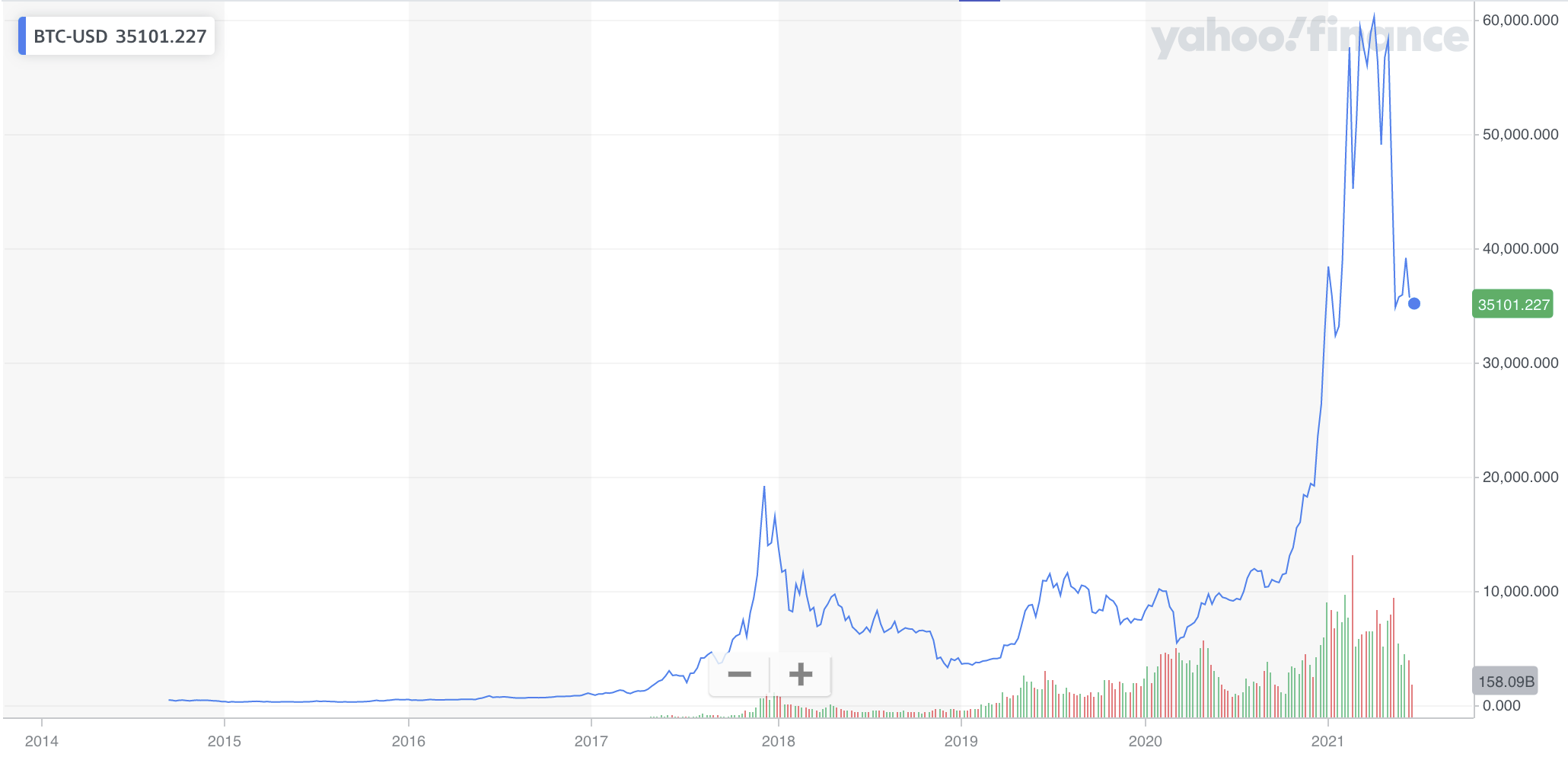 Figure 1. Bitcoin price chart until June 2021
As shown in Figure 1. Bitcoin price chart courtesy of Yahoo! Finance, the first major Bitcoin bull run topped at nearly $20K at the end of 2017. That is when the ICO boom is also near its peak. The subsequent Bitcoin bull run has so far seen a top at over $60K in April 2021, when DeFi was in a frenzied state. The Bitcoin price has dropped to nearly half after the latest top and is still in the uncertain territory in June 2021. But the DeFi sector continues to progress rapidly.
Now let us look at ICO and DeFi in more detail.
The Initial Coin Offering (ICO) Boom - exposing Bitcoin to the mass for the first time
 Initial Coin Offering (ICO)
Bitcoin and blockchain stayed as niche phenomenon unknown to most of the general public for many years after it was born in the late 2000s. Even for the small group of people who have heard about it, the non-trivial technical knowledge required to access Bitcoin is a big hurdle to overcome.
But people deep in the Bitcoin circle continued the development, including creating separate blockchains by tweaking the parameters of the original Bitcoin blockchain or adding new functionalities. Many try to explore different use cases with blockchain. One of the applications eventually exploded and attracted mass mainstream media attention is called Initial Coin Offering (ICO).
The term ICO originates from another more familiar term Initial Public Offering (IPO). An IPO is generally a company’s first sale of shares to the public. A traditional IPO typically uses investment banks as underwriters, and the company usually also seeks to list its shares on a stock exchange.
The idea of ICO is to directly raise funding through the blockchain, removing the traditional financial underwriters and stock exchanges. Just like the Bitcoin blockchain has its Bitcoin, other blockchain projects can create their own native “coins”. People also use more general terms “token” or “crypto token” to refer to the “coin” created on the blockchains. The terms are often used interchangeably, but they do not always mean the same thing. A “coin” commonly means a blockchain’s native asset, while “token” is broader and often means an asset created through a smart contract; for example, Ether is native to Ethereum rather than an ERC-20 token. When an investor participates in the ICO, they receive specific crypto tokens instead of receiving stocks of a public company as in an IPO.
As an example, Ethereum is a blockchain different from the Bitcoin blockchain. It raised about $18 million worth of bitcoin through a public sale in 2014. The investors send Bitcoins to the project development team and in return, they receive the Ethereum blockchain’s native token called Ether. Ether can be used to pay the processing fees for conducting transactions on the Ethereum network. Ethereum is a general-purpose blockchain and allows other developers to create various applications on it, without the need to create a new blockchain for each new application. Ethereum further makes it easy for each application to issue its own application-specific tokens. That functionality opened the gate for these applications to conduct their own ICO directly on the Ethereum network. That allows the application to collect investors’ Ether in exchange for whatever token the application issues by itself.
The lowered barrier of entry for teams to conduct ICOs, coupled with limited crypto-specific guidance and enforcement, gradually drove the ICO phenomenon to an insane level. At the height of the ICO frenzy, contemporary estimates put the total ICO amount at $4B in 2017, and then another $6.3B in the first quarter of 2018 alone. As could be expected, a large number of low-quality projects emerged. Many of them managed to collect a large number of crypto funds using simply a whitepaper without any real execution plan. Then the tide started to change direction. In July 2017, the US Securities and Exchange Commission (SEC) applied existing federal securities laws to digital assets, finding that DAO tokens were securities and stating that offers and sales of digital-asset securities must be registered unless a valid exemption applies. Eventually, the ICO craze started to fade as Bitcoin entered a bear market in 2018.
Fast forward to today, the overall number of ICOs has seen a large reduction but many new variations of ICO also appeared. For example, Initial Exchange Offering (IEO) uses a bit of a hybrid approach, where a crypto trading exchange is enlisted to help sell the tokens. Initial DEX Offering (IDO), is similar to IEO but uses a different type of exchange called Decentralized Exchange, a term we will cover later in the DeFi section.
From the public’s perspective, the most significant impact of the ICO frenzy, along with the 2017 Bitcoin bull run, is probably the extensive mainstream media coverage at that time that exposed a lot more people to the names of Bitcoin (and blockchain) for the very first time.
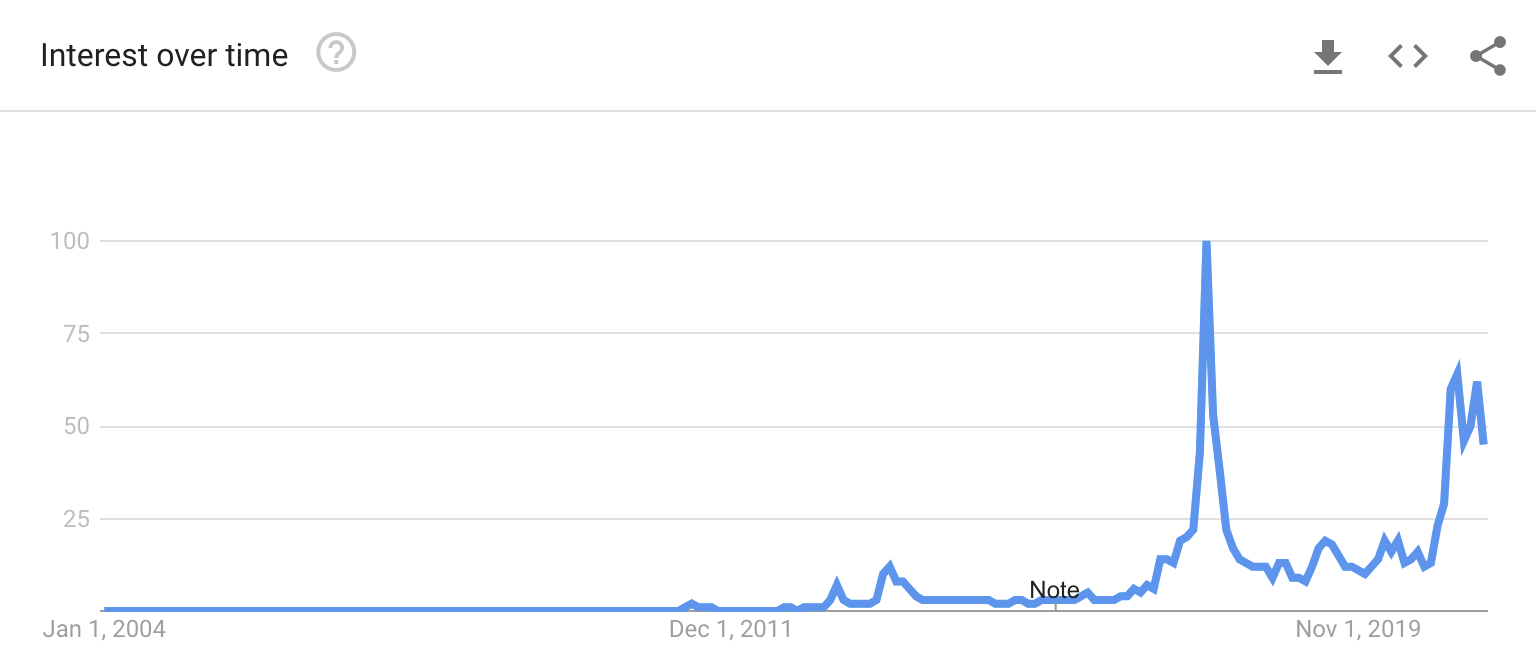 Figure 2. Google Trend Search Interest for the term “Bitcoin”
Figure 2. taken from Google Trends shows the worldwide search interest for “Bitcoin” since 2004. The incredible level of public interest in Bitcoin in December 2017 can be seen at the peak of the highest spike. Notably, even when the most recent bull run propelled Bitcoin price to three times its high of 2017 (over $60K vs. $20K), the “Bitcoin” search popularity is only around 64% that of the 2017 peak! One plausible hypothesis is that many people have already known Bitcoin since 2017, so they no longer need to do a basic search for the term today.
Decentralized Finance (DeFi) - blockchain frenzy extending to the roaring 2020s
 Decentralized Finance (DeFi)
What is Decentralized Finance (DeFi)? DeFi could be a term for financial applications that seek to replace or reorganize traditional intermediaries through blockchains and smart contracts. In that broad sense, ICO also moves part of an offering outside traditional underwriters and securities exchanges. However, here we will adopt a more commonly used definition, referring DeFi to the broad range of new financial applications that flourished primarily after the ICO craze.
The notion of DeFi actually started to get real attraction around late 2019. The DeFi space exploded in 2020 and continued its accelerated momentum into 2021. The market cap of DeFi hits an all-time high of over $140B in early May 2021, seen in Figure 3 courtesy of CoinGecko. That represents an over 7-fold increase since the beginning of 2021 alone. This number has subsequently dropped along with the Bitcoin price itself.
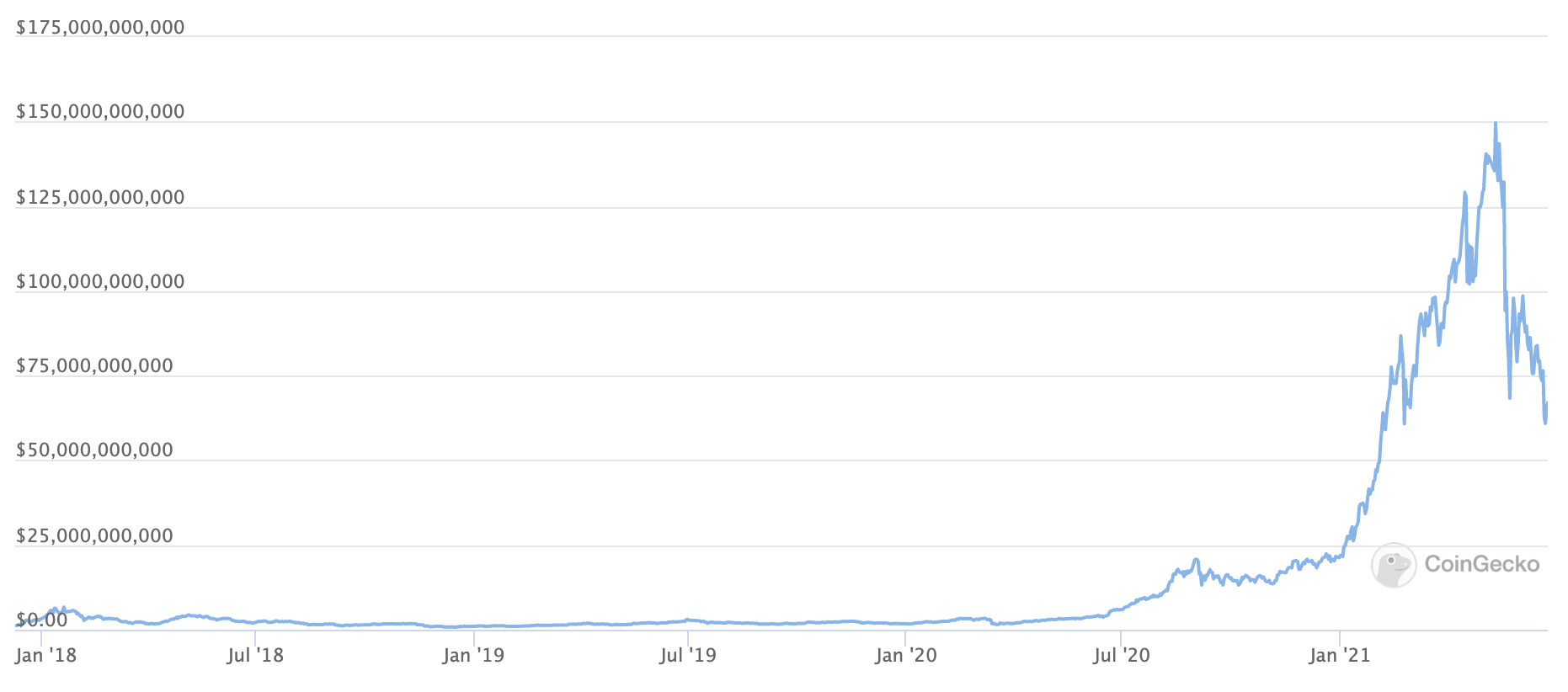 Figure 3. DeFi Market Cap
Decentralized Lending and borrowing
Just like Bitcoin made de-centralized payment possible, DeFi is applying blockchains and smart contracts to services such as trading, lending, and borrowing without relying on a traditional financial institution for every transaction. Let us use the lending and borrowing service as an example to see how DeFi works.
In the traditional banking service, the lender and borrower both transact through the bank, which acts as a trusted third party. In the DeFi world, the bank’s role is divided among smart contracts and the other parts of the protocol instead of being performed by one institution. A smart contract is basically computer code that defines the specific use case. The code is typically run on a compatible blockchain such as Ethereum to execute the transactions in a decentralized fashion (more background about the smart contracts can be found in our gentle introduction to blockchain). A DeFi protocol generally combines one or more smart contracts with the rules and supporting systems around them.
One of the most well-known DeFi lending and borrowing protocols is called “Compound”. Built on the Ethereum blockchain, Compound connects the lending and borrowing parties and enables them to lend or borrow different types of crypto tokens directly. Here is how it works in a nutshell. First, lenders send their lending assets in crypto tokens to the Compound protocol. Compound aggregates deposits of each supported asset in a separate money market, represented by that market’s cToken. The lenders are therefore also called liquidity providers. Borrowers then borrow a crypto token from its market and pay interest on it. The interest borrowers pay accrues to suppliers of that asset, after a governance-set portion is retained as protocol reserves. The specific interest rate for lending and borrowing is automatically adjusted using a mathematical formula based on how much of that market’s available cash has been borrowed.
It is worth noting that in order to borrow, the borrowers are required to put up some crypto tokens as collateral first. Due to the usually high price volatility of crypto tokens, the value of the crypto token collateral required is typically much higher than the value of the crypto tokens borrowed. But the collateral is also supplied into that asset’s market. As a result, borrowers themselves also become liquidity providers. Interest in that market accrues to suppliers of that asset after reserves, so borrowers themselves also earn part of it. This leads to an interesting situation where the interest received from the collateral the borrower put in can sometimes exceed the interest the borrower pays for the borrowed assets. In those situations, the borrower is effectively getting paid for borrowing!
To summarize, the lending and borrowing protocol implements separate liquidity markets that perform some functions normally handled by a bank. Users including lenders and borrowers can interact with these markets directly, while still depending on the protocol’s code, governance, price feeds, and the underlying blockchain.
Decentralized Exchanges (DEX)
While today there are tons of DeFi applications available, knowing the concept of the liquidity pool in the lending and borrowing case makes it much easier for us to understand the gist of a majority of other DeFi applications. Let us look at another prominent DeFi service - crypto token exchanges. They are increasingly popular due to the large number of different crypto tokens that have been created by many DeFi protocols.
Early crypto token exchange services resemble the traditional stock exchange model. In such a model, the exchange is a centralized trading venue that keeps an order book. Separate market makers may quote prices and provide liquidity. Buyers and sellers can transact only if there is a price match between the two parties.
The arrival of DeFi changed the landscape and leads to the birth of a Decentralized Exchange (DEX). If we think about the role of the liquidity pool in the Compound protocol, we can find that it automatically connects the lender and borrower, enabling lending and borrowing transactions. If we apply the same concept to the exchange, we can instead connect traders with liquidity supplied to a pool. An order book is no longer required. An Automated Market Maker (AMM) is a smart-contract mechanism that prices trades against a liquidity pool. AMMs enabled a new design for decentralized exchanges, although some DEXs use order books instead.
A representative decentralized exchange based on AMM is called the “Uniswap” protocol. The example below describes Uniswap v2; Uniswap v3 had launched in May 2021 with a different design that let providers concentrate liquidity within chosen price ranges. However, providing liquidity to an exchange pool like in Uniswap has some important differences from providing liquidity to a lending and borrowing pool like in Compound. Liquidity providers for a lending and borrowing pool usually supply one type of asset at a time. But liquidity providers for an exchange pool are usually required to contribute a pair of crypto assets together so that the two assets can be exchanged. For example, Alice may pair $1K worth of crypto token A and $1K worth of crypto token B and deposit them into the exchange’s liquidity pool. Other liquidity providers may do the same. Users of the exchange can then interact with this liquidity pool to buy token A with token B or vice versa. In Uniswap v2, the price moves along a constant-product formula as a trade changes the quantities of the two tokens in the pool. This way, users of the exchange are again dealing directly with the liquidity pool created by a smart contract. To encourage people to provide liquidity, the decentralized exchange usually charges a small number of usage fees and passes them to the liquidity providers as incentives. However, providing crypto token liquidity pairs to decentralized exchanges could also suffer so-called “impermanent loss”, which can occur when the relative price of the two pooled tokens changes, changing the provider’s token mix and its value relative to simply holding the tokens.
Governance in DeFi
Another innovative DeFi feature allows the liquidity providers to not only earn transaction-associated rewards but also participate in the governance of the DeFi protocol. What do we mean by the governance of the DeFi protocol? Recall that a DeFi protocol specifies the rules of the financial service it supports. Over time, there may be different aspects of these services that need to be updated. For instance, should a lending platform support a new type of crypto token B in addition to the token A that is currently supported? Should a decentralized exchange increase its transaction fee from 1% to 3% to attract more liquidity providers, but at the potential cost of losing users due to the higher fees? These are the type of governance decisions.
DeFi teams may issue a special type of token called governance tokens. Holders of these governance tokens receive proportional rights to vote for governance decisions of the protocol. There could be various ways to determine how these governance tokens should be distributed. On one hand, in services like lending and borrowing or exchange services where liquidity providers are indispensable, it is appropriate to distribute governance tokens to the liquidity providers in proportion to the amount of liquidity they contributed to the platform. On the other hand, customers of any platform are certainly critical as well. The protocol could reward users with the governance token based on measures of their loyalty, e.g., the length of time they have used the service. These governance token distribution mechanisms aim to align the interests of stakeholders and platform developers, creating a positive loop for the platform’s sustainable growth. Compound’s distribution of COMP to suppliers and borrowers helped popularize governance-token liquidity mining, but it was not the first DeFi governance token: MKR holders were already governing the Maker Protocol years earlier. Uniswap and numerous other protocols have also issued their own governance tokens.
Yield Farming in DeFi
As we have seen in various use cases, liquidity providers supply their crypto tokens to a DeFi protocol or liquidity pool. In return, they get rewarded with crypto tokens from the financial transactions that the DeFi protocol supports - such as interest earnings in lending transactions and transaction fees in the crypto exchange. They also have the opportunity to earn governance crypto tokens if the protocol offers them. In DeFi, there is a special term describing the process of using crypto tokens to earn additional crypto tokens called “Yield Farming”. People who practice yield farming are known as “Yield Farmers”. Since there is an increasing number of platforms offering these yield farming opportunities, many yield farmers create strategies to move their crypto assets among different platforms from time to time to maximize the yield they can earn across the platforms.
Connecting DeFi with the real-world assets
The liquidity pool and AMMs provided a cornerstone for numerous DeFi protocols supporting asset exchanges. But if they are only for crypto assets that are isolated from the real world, the usage is still extremely limited. For DeFi to really enter the mainstream, it has to bridge from the pure crypto space to the non-crypto world, i.e., supporting fiat currency and real-world assets. The creation of stablecoins and synthetic assets addressed the gap between assets in the crypto space and the real world.
Fiat-backed centralized stablecoins
A stablecoin is a crypto token whose value is pegged to the value of a fiat currency or other stable assets. USDC (USD Coin) is an example of a stablecoin that ties its value to the US dollar. To keep one USDC’s value close to one dollar, the issuer holds dollar-denominated reserve assets at least equal to the USDC in circulation, according to its monthly reserve attestations. For that reason, this type of stablecoin is called fiat-collateralized stablecoin. These stablecoins essentially create a digital token presentation of their collateralized fiat currency. In other words, it turns fiat currency into a crypto token that can be used like any other native crypto token in the DeFi world. In addition, they also address a concern that keeps many people away from the DeFi space - the high volatility of the value of most crypto tokens - although a stablecoin can still lose its peg.
It is worth pointing out that even though these fiat-collateralized stablecoins are meant to facilitate the adoption of DeFi, many people consider the process that issues these stablecoins against the true decentralized spirit. This is because we have to trust the issuer of these stablecoins that they indeed have the same amount of collateral set aside as they promised. Although the issuer may publish reserve reports and third-party attestations about the assets backing the tokens, these are not the same as a full financial-statement audit, and the issuer is still a trusted intermediary in this process like in traditional finance. In other words, these coins can be considered centralized stablecoins for the decentralized world. In extreme cases, the issuer also has the ability to prevent a specific user from using these stablecoins.
Crypto asset-backed de-centralized stablecoins
People who adhere to a fully decentralized mentality prefer the truly decentralized version of stablecoins. That means we have to remove the third-party intermediary holding the fiat collaterals. One natural way to achieve that is to move the collaterals from the fiat world onto the blockchain! That is the idea behind crypto asset-backed stablecoin.
A well-known stablecoin of this category is the US dollar-pegged DAI. DAI is generated through the Maker Protocol, a suite of smart contracts governed by MKR voting. It has no single issuing custodian, although governance, price oracles, and its collateral choices create dependencies; by 2021, centralized USDC already backed part of DAI. To mint DAI, a user locks an accepted crypto asset such as Ether as collateral in a vault. Vaults backed by volatile crypto assets such as Ether typically require over-collateralization. That means the required value of crypto token collateral is much larger than the value of DAI minted, e.g., 1.5 dollar value of Ether to generate one DAI that worths one dollar. Vault owners pay a governance-set Stability Fee on the DAI they generate. Separately, DAI holders can deposit DAI in the Dai Savings Rate contract to earn savings.
How does the Maker protocol keep the peg of one DAI with one dollar value? Governance uses several mechanisms. If DAI trades below one dollar, raising the Stability Fee makes it more expensive to keep DAI debt outstanding, encouraging vault owners to buy DAI and repay debt; raising the Dai Savings Rate can also increase demand for DAI. If DAI trades above one dollar, lowering those rates can encourage more borrowing and reduce demand for savings. Since 2020, the Peg Stability Module has also allowed direct swaps between DAI and approved stablecoin collateral, subject to fees. Market arbitrage connects these mechanisms to the price.
Non-collateralized algorithmic de-centralized stablecoins
While crypto asset-backed stablecoins can be truly decentralized, they also have their shortcomings. For instance, the over-collateralization in DAI stablecoin is clearly not capital efficient. So can we do it differently? It is actually possible to create a decentralized stablecoin only using partial collateral or even without using any collateral. While this idea might sound radical, it is not irrational at all. Recall that our world has long abandoned the “gold standard”, which links the currency of a country directly to its gold reserves. Nowadays we are already using fiat money from our central banks that is not redeemable for a fixed quantity of gold. Its acceptance depends on public trust, laws that make it legal tender, and confidence that its value will remain reasonably stable. The value of our fiat currency fluctuates depending on its demand and supply.
Following the same logic, we can design the so-called algorithmic stablecoins that try to create and maintain their value through rules that change supply in response to demand. For a US dollar-pegged algorithmic stablecoin, if its value is worth more than one US dollar, then its supply is increased to reduce the value back to one US dollar; if it is worth less than one US dollar, then its supply is decreased to bring its value higher back to one US dollar. There are many different algorithmic stablecoin protocols in the market that all use different methods to achieve supply-demand adjustment, with various levels of efficacy. In reality, designing an algorithmic stablecoin that can truly remain stable may require consideration of not only technical, but also social, psychological, and many other factors.
Synthetic crypto assets - bringing the real world to DeFi
If stablecoins link the crypto tokens and the fiat currency, then synthetic crypto assets bridge crypto tokens with the rest of the assets in the real world. Synthetic crypto assets are like crypto derivatives. Derivatives are financial instruments whose price is based on another asset, in this case, the real-world assets that the crypto asset represents. The “Synthetix” protocol is an example DeFi service that provides such a service. It allows people to use crypto collateral to mint synthetic crypto assets. These synthetic assets can track the real-time price value of all kinds of real-world assets such as commodities, currencies, and stock indexes. For instance, if we create a synthetic gold crypto token, the protocol can use oracle prices so that the token is designed to track the price of gold, although oracle timing, fees, liquidity, and market conditions can create deviations. We can then buy or sell it without actually owning gold. This effectively opens DeFi for the entire world of assets.
Conclusions
Since the birth of Bitcoin, financial applications have been at the forefront of the blockchain space. We have seen two major milestones for blockchain in finance. The first is the ICO boom around 2017-2018. The second is the DeFi movement throughout 2020 and continued in 2021. These timings coincide with the two biggest Bitcoin price bull runs in its history, which is not surprising.
ICO is used mostly by blockchain project development teams to raise funds directly from investors without involving a securities exchange. The spectrum of DeFi is much broader and really expanded to services that are more likely to be used by everyday people. We introduced the liquidity provider and AMM concept, which is a cornerstone for a wide range of DeFi applications serving the exchange of assets. We also looked at the key innovations that filled the gap between assets of the crypto space and those of the real world including stablecoins and synthetic crypto assets.
DeFi applications share a list of common features: their services are defined in smart contract code and their transactions are recorded on a blockchain. But the contracts may be upgradeable, and many systems still depend on governance, oracles, front ends, and stablecoin issuers. Removing the traditional bank or exchange does not remove every intermediary, nor does it guarantee faster or cheaper transactions. The contracts can be open to anyone who can access the network, although transaction fees and the interfaces used to reach them can still limit practical access. The layers and dependencies of a DeFi system matter as much as the smart contract itself.
All the good things about DeFi being said, we cannot emphasize enough the extremely high risk of DeFi service at this very early stage of its development. As of June 2021, DeFi is still pretty much a wide west. Regulation is uneven, with existing financial laws applying to some activities but limited DeFi-specific guidance as numerous different types of DeFi protocols pop up almost every day, everywhere. It is very exciting to see a lot of true innovations taking place rapidly in the space, but it is also quite concerning to witness frequent security breaches or service vulnerabilities that have cost DeFi users tens to even hundreds of millions of dollars. Therefore, careful research and prudent risk management are a must for anyone who is interested in getting into DeFi.
Note: this article is part of my Introduction to Blockchain, Crypto, Metaverse and Web3: Beyond the Hype. You may find the rest of the articles in the series here.
2026 update
The ICO and DeFi milestones described above still help explain how blockchain entered finance. What has changed since June 2021 is the evidence. Token fundraising now has clearer legal boundaries, several large DeFi protocols have changed their mechanics, and stablecoins have been tested by failures that were still hypothetical when this article was published.
Token fundraising is judged by the transaction
Calling an asset a coin, token, or utility token does not determine its legal status. The way it is sold and the promises around the sale matter. In the Ripple case, the district court held that Ripple’s direct sales to institutional buyers were unregistered offers and sales of investment contracts under the Securities Act, while its anonymous sales through crypto exchanges were not offers and sales of investment contracts. The final judgment imposed a $125,035,150 penalty, and both sides dismissed their appeals in August 2025.
The SEC later issued a Commission interpretation in March 2026. It says that a crypto asset which is not itself a security can still be offered and sold as part of an investment contract, and it explains how that relationship can end. The CFTC provided related guidance. In the European Union, MiCA now provides a common framework for many public crypto-asset offers and service providers. IEO and IDO describe how a token is distributed. They do not create an exemption from securities law.
The protocols kept changing after 2021
The Compound explanation above describes version 2. In 2022, Compound launched its first Compound III market with USDC as the borrowable base asset. In the current design, each deployment has one base asset that can be borrowed; supplied base assets earn interest, while collateral assets do not. That is a meaningful change from the separate interest-bearing markets described in the historical section.
Uniswap has also moved beyond the paired-pool model in the example above. Uniswap v4 went live in January 2025 with “hooks” that let developers add custom logic to pools, swaps, fees, and liquidity positions. Governance later activated protocol fees and a mechanism that uses them to burn UNI. Uniswap’s current documentation says the mechanism has operated since December 2025 and that UNI holders have no individual claim on protocol revenue. Where protocol fees are active, the fee-based link between use and UNI now runs through the burn.
MakerDAO became Sky in 2024. DAI can now be converted one-for-one into USDS, and SKY became the sole governance token in 2026. The names changed, but the separation between the stablecoin, the collateral behind it, and the token used for governance remains important.
Synthetix changed the product behind its name. It deprecated non-USD legacy spot synth exchanges on Ethereum in July 2024 and ended legacy synth exchanges on Optimism on January 31, 2026. Its 2026 roadmap focuses on perpetual futures, derivatives with no fixed expiration date. The broader idea of creating on-chain exposure to a reference price remains, while the original product has been narrowed and rebuilt.
Stablecoins faced two different stress tests
The warning in the algorithmic-stablecoin section became concrete in May 2022. TerraUSD largely lacked assets to back its value. A run wiped out its roughly $18 billion market value along with the value of LUNA within days.
Fiat-backed stablecoins exposed a different dependency. In March 2023, Circle disclosed that $3.3 billion of USDC’s reserves were held at Silicon Valley Bank. USDC traded below one dollar before US banking authorities protected the bank’s depositors and the peg recovered. The episode did not resemble Terra’s design failure, but it showed that an on-chain token can still carry the banking risk of its off-chain reserves.
Stablecoin rules have also become more specific. The United States enacted the GENIUS Act as Public Law 119-27 in July 2025, creating a federal framework for payment-stablecoin issuers. As of September 2026, agencies were still writing implementing rules; the OCC, for example, had proposed standards covering reserves, redemption, audits, reports, and supervision for issuers under its jurisdiction. The OCC described that proposal as one part of the law’s implementation. The law therefore should not be read as proof that every stablecoin already complies with one finished system.
DeFi’s other dependencies became easier to see
DeFi did remove some traditional institutions from individual transactions, but it did not remove dependence. Smart contracts depend on governance and software; lending systems depend on collateral prices; synthetic assets depend on oracles; stablecoins depend on their reserves; and users often depend on bridges and websites. In March 2022, attackers drained the Ronin bridge of 173,600 ETH and 25.5 million USDC. The bridge was a separate trust layer even though the assets on either side lived on blockchains.
The original distinction still holds: ICO changed how projects sold assets, while DeFi changed how financial functions could be assembled in software. The years since 2021 add a practical test to both. For a token sale, it is worth asking what legal and economic relationship is being sold. For a DeFi protocol, it is worth asking where the real dependencies sit - in the contract, governance, oracle, reserve assets, bridge, or front end. Those questions make the design easier to evaluate.
Related Articles
What is NFT and where is it heading?
The year 2021 witnesses the explosion of NFT. In this article, we briefly introduce what NFT is and examine what are the factors behind the success of the top NFT projects. Then we discuss the possible future directions NFTs are heading to.

A comprehensive introduction to Blockchain, Crypto, Metaverse and Web3: Beyond the Hype
Dive into blockchain, crypto, and Web3 with this comprehensive guide. Explore Bitcoin's roots, Ethereum's evolution, and the metaverse's convergence of virtual and real worlds. Learn about tokenomics, DeFi, NFTs, DAOs, and blockchain's transformative impact on the real economy.
Bridging blockchain and the real world - from Oracle to Hybrid Smart Contracts
Blockchain itself forms a separate digital space. But whether in finance or real economy sectors, a blockchain use case often needs to interact with the external world. How can this be accomplished? We introduce how oracle helps bridge the on-chain and off-chain worlds of blockchain.